A Human Development Organization

People are more capable of growth
than society assumes.

That capacity can be systematically developed.

The question isn't whether people can change. It's whether they can consistently become who they intend to be when the pressure is real.

Underdogs Unlocked builds the capacity for people — and the institutions that serve them — to carry their lives forward when the pressure is highest.

The Problem

People often struggle to connect the decisions they are making today with the person they intend to become.

This is not a failure of effort or intention. It is a failure of architecture — the internal structure that allows a person to access who they are at their best, especially when life makes that hardest.

Institutions — colleges, employers, workforce agencies, correctional systems — invest heavily in programs, services, and resources. And yet the gap persists. Not because the support isn't there. But because the person hasn't yet developed the capacity to use it consistently, under pressure, when the moment arrives.

That capacity is what Underdogs Unlocked exists to build.

"The failure point isn't a lack of information, opportunity, or support. It's the distance between who someone is at their best — and who they become under pressure."

The Threshold

Every major transition
begins at a threshold. Most people don't know they're standing at one.

Underdogs Unlocked narrows the distance between who someone is at their best and who they become under pressure.

Underdogs Unlocked is a human development organization. Reentry. Workforce. Education. Recovery. Leadership. These aren't different kinds of work. They're different places where the same human architecture matters.

The methodology was built in the most demanding transition environment available: inside correctional facilities, with people society had largely decided were beyond development. If it can withstand that environment, it deserves to be tested in others. That is the premise. That is what we are proving.

The outcome is simple: people develop the capacity to become who they intend to be when the pressure is highest.

Methodology

A disciplined architecture for building human capacity.

Underdogs Unlocked operates through a four-stage arc — not a curriculum, not a checklist, but a developmental sequence that builds on itself. Each stage develops a specific capacity. Together, they produce a person who can carry their own life forward.

Stage 01

Awareness

Recognizing the gap between who you are under pressure and who you intend to be. The work begins here — not with motivation, but with honest seeing.

Stage 02

Control

Developing the capacity to pause between stimulus and response. Building the internal regulation that makes deliberate choice possible — not just in theory, but accessible under real pressure.

Stage 03

Ownership

Taking authorship of decisions and their consequences. Moving from reactive identity to chosen identity — the person who acts from values rather than reacts from habit.

Stage 04

Sustainment

Building the practices, structures, and habits that keep the developmental gains alive after the curriculum ends. Capacity without sustainment returns to the baseline.

The four-stage arc is supported by twelve frameworks that operationalize each stage into specific reflection practices, language patterns, and behavioral applications. Together, they constitute the Underdogs Unlocked methodology — a structured system for developing capacity, not delivering information.

The developmental architecture described here is operationalized through REBUILT — the methodology system developed by Underdogs Unlocked to extend this work beyond the classroom and into a person's daily life.

The population changes. The work does not.

Who We Serve

One methodology. Three doors.

The same developmental architecture applies wherever human capacity is the limiting factor. The population changes. The work does not.

Institutional Track — Active Now

Organizations Serving People in Transition

Colleges, workforce agencies, correctional systems, and reentry organizations. Third-party funded. Designed for the populations these institutions exist to serve — people navigating transitions that most programs aren't built to handle. Underdogs Unlocked operates as a complement to existing institutional infrastructure, not a replacement for it.

Staff Development Track

The People Who Do the Work

The instructors, case managers, counselors, and frontline staff who carry the weight of institutional mission every day — often without the same developmental support they provide to others. The methodology applies at this level too. Strong institutions are built from people who can operate under pressure.

Individual Track

Anyone at a Major Life Transition

The market is anyone whose identity took a hit large enough that the old self can't run the new life. Career pivot. Leadership change. Loss. Recovery. Reentry. The transition is different in every case. The human architecture that makes it survivable is the same.

Real people.
Real transitions.
Honest framing.

The evidence base is early. What follows are authorized case studies — qualitative documentation of the methodology in practice. No causal claims. What they show is what this work produces in real conditions, and why it is worth the harder work of formal validation.

All case studies shared with participant authorization. Underdogs Unlocked does not publish participant stories without written consent. Both individuals first engaged with the methodology inside a Florida correctional facility — through the class where this work was developed and tested. They are not program graduates or paying customers. They are people who invited us into their process and allowed us to document what happened.
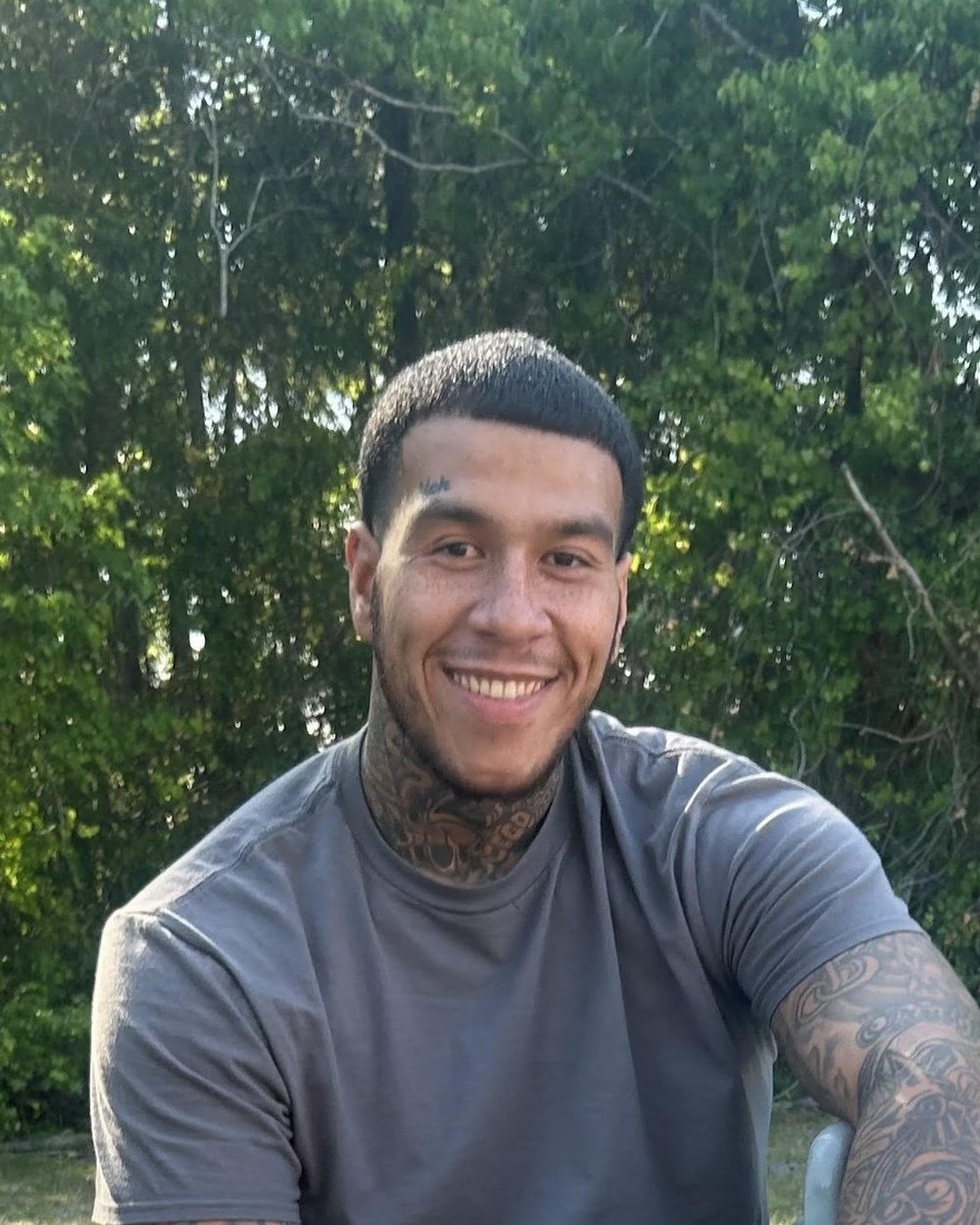
Jacob Betances

Jacob Betances — Authorized

"The frameworks didn't give me answers. They gave me a way to see what I was doing."

Jacob engaged with the Underdogs Unlocked methodology during a period of significant transition. What emerged was not a behavior change — it was a shift in how he understood his own decision-making. He is currently enrolled in higher education.

Robert White

Robert White — Authorized

"I've been through a lot of programs. This was the first one that made me look at myself instead of just my situation."

Robert engaged with the methodology over an extended period of high-contact facilitation. His documentation represents the most detailed record of the methodology in practice — a window into what Awareness and Control look like when they're actually being built, not described.

What Happens Next

One conversation.
That's where it starts.

If you've read this far and you're wondering whether this belongs in your institution, the answer usually begins with one conversation — not a proposal, not a program overview, not a pricing discussion.

We begin with the people your institution exists to serve. Who they are. Where your current approach runs out of road. Whether this methodology addresses the specific gap you've been trying to close.

If it doesn't fit, we'll tell you directly. If it does, we'll design the smallest meaningful starting point together — one that gives your institution real evidence before any larger commitment is made.

Start that conversation

That conversation usually covers:

  • Who you're trying to serve — and what transition they're navigating when your institution encounters them

  • Where your current approach reaches its limits — not as a criticism, but as a starting point for honest assessment

  • Whether the methodology addresses the specific gap you're seeing — or whether a different approach is the better fit

  • What the smallest meaningful pilot would look like — if a next step makes sense for both of us

The Founder

Tim Ferguson

Tim Ferguson

Founder, Underdogs Unlocked LLC

The first time Tim Ferguson understood what he was actually watching, he was standing in a dugout — not during a game, but between pitches. The same player who was sharp and decisive in practice would hesitate when the stakes were real. Talent wasn't the variable. Something underneath talent was.

He spent the next three decades watching that pattern repeat across entirely different rooms. Advising individuals and families through real estate decisions — often the most consequential financial choices of their lives. Building and managing investments across multiple asset classes. The stakes changed. The pattern didn't. Intelligence, experience, and preparation didn't reliably close the gap between what people intended and what they actually did under pressure.

The correctional classroom confirmed what he'd been watching for decades — and became the proving ground for building a methodology around it. If this framework could hold up with people who had every reason to believe their future was already written, it deserved to be taken further.

Inside that facility, he was surrounded by men who had genuinely lost everything. His own moments of brokenness looked nothing like theirs. But he recognized something of himself in that room. The difference wasn't the pattern. It was the consequences. The prison didn't introduce him to the problem. It revealed it with a clarity that made every other room in his life make sense — and made leaving it unbuilt no longer an option.

Underdogs Unlocked was not built from research. It was built from watching.

If this is the question your institution has been asking, let's find out together.

We don't begin with a pitch. We begin with the people your organization exists to serve. Start there.

underdogsunlocked@gmail.com

We respond to every message personally.